
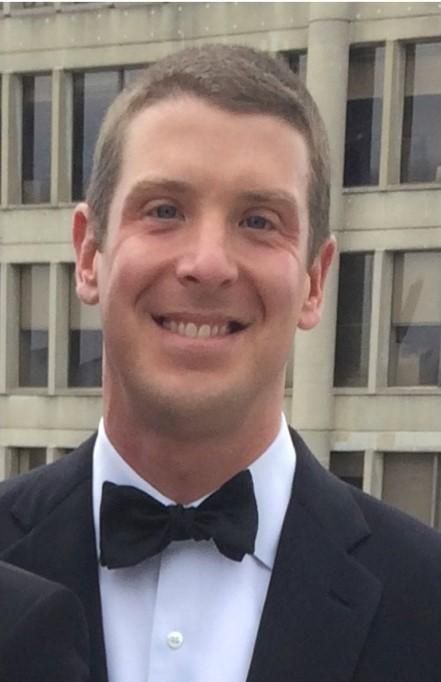
Michael Scott Boyce

Associate Professor of Biochemistry
Biochemistry
Box 3711, Durham, NC 27710
208A Nanaline H Duke, Durham, NC 27710

Overview


The Boyce Lab studies mammalian cell signaling through protein glycosylation. For the latest news, project information and publications from our group, please visit our web site at http://www.boycelab.org or follow us on Twitter at https://twitter.com/BoyceLab.

Current Appointments & Affiliations


Associate Professor of Biochemistry · 2019 - Present Biochemistry, Basic Science Departments
Associate Professor of Cell Biology · 2022 - Present Cell Biology, Basic Science Departments
Member of the Duke Cancer Institute · 2014 - Present Duke Cancer Institute, Institutes and Centers

In the News


Published July 8, 2019
White House Honors Four Faculty for Early Career Research Accomplishments
Published July 2, 2019
White House announces PECASE winners
Published October 16, 2013
1,100: Night Lights

View All News

Recent Publications


Evidence for functional regulation of the KLHL3/WNK pathway by O-GlcNAcylation.

Journal Article Glycobiology · August 11, 2025 The 42-member Kelch-like (KLHL) protein family are adaptors for ubiquitin E3 ligase complexes, governing the stability of a wide range of substrates. KLHL proteins are critical for maintaining proteostasis in a variety of tissues and are mutated in human d ... Full text Link to item Cite

Dynamic regulation of Sec24C by phosphorylation and O-GlcNAcylation during cell cycle progression.

Journal Article J Biol Chem · August 2025 During mitosis, eukaryotic cells cease anterograde trafficking from the endoplasmic reticulum (ER) toward the Golgi. This cessation corresponds with the dispersal of the COPII transport protein, Sec24C, from juxtanuclear ER exit sites (ERES) into a diffuse ... Full text Link to item Cite

Dynamic regulation of the COPII interactome and collagen trafficking by site-specific glycosylation of Sec24D.

Journal Article bioRxiv · June 13, 2025 Coat protein complex II (COPII) mediates anterograde trafficking from the endoplasmic reticulum (ER). While the core COPII machinery is well-characterized, how cells regulate COPII to accommodate large cargoes, including collagens, remains incompletely und ... Full text Link to item Cite
View All Publications

Recent Grants


Pharmacological Sciences Training Program

Inst. Training Prgm or CMEPreceptor · Awarded by National Institutes of Health · 2025 - 2030

The Duke Preparing Research scholars In bioMEdical sciences (PRIME): Cancer Research Program

ResearchPreceptor · Awarded by National Cancer Institute · 2023 - 2028

Cell signaling through O-GlcNAc reader proteins

ResearchPrincipal Investigator · Awarded by National Institute of General Medical Sciences · 2016 - 2027

View All Grants

Education, Training & Certifications


Harvard Medical School · 2005 Ph.D.