

Overview
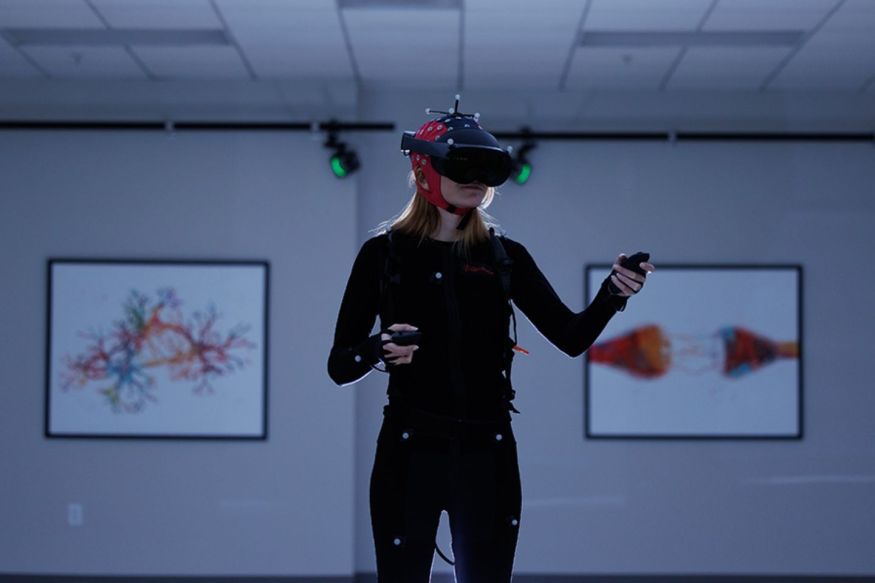
The Suthana Laboratory aims to advance our understanding of the neural mechanisms underlying memory and emotion, with a focus on developing innovative neuromodulation and neuroimaging technologies. By integrating intracranial electrophysiological recordings with non-invasive peripheral measurements, the lab seeks to improve treatments for neurological and psychiatric disorders, and provide new tools for studying brain function in real-world contexts.
Current Appointments & Affiliations
Professor in Neurosurgery
·
2025 - Present
Neurosurgery,
Neurosurgery
Professor of Biomedical Engineering
·
2025 - Present
Biomedical Engineering,
Pratt School of Engineering
Professor of Neurobiology
·
2026 - Present
Neurobiology,
Basic Science Departments
Recent Publications
Effects of virtual reality on spatiotemporal gait parameters and freezing of gait in Parkinson’s disease
Journal Article Npj Parkinson S Disease · December 1, 2025 Virtual reality (VR) is increasingly used to study freezing of gait (FOG) in Parkinson’s disease (PD). However, overground gait in VR typically exhibits shorter, wider, and slower steps than real-world gait in both healthy and PD populations. This altered ... Full text CiteBrain activity associated with breakthrough food preoccupation in an individual on tirzepatide.
Journal Article Nat Med · December 2025 Obesity and related conditions are associated with distressing food preoccupation that often culminates in dysregulated eating behaviors. Incretin-based therapies can reduce excessive weight in obesity, but their impact on dysregulated eating behaviors rem ... Full text Link to item CiteMultiregional representations of intertemporal decision making in human single neurons.
Journal Article Sci Rep · July 8, 2025 Understanding the neural mechanisms underlying delay discounting-the tendency to prefer smaller, immediate rewards over larger, delayed rewards-is critical for elucidating the etiology of impulsive decision-making, a hallmark of several psychiatric conditi ... Full text Link to item CiteRecent Grants
Simons Collaboration on Ecological NEuroscience (SCENE)
ResearchPrincipal Investigator · Awarded by Simons Foundation · 2025 - 2030Ecosystem for Multi-modal Brain-behavior Experimentation and Research (EMBER)
ResearchPrincipal Investigator · Awarded by Johns Hopkins University · 2025 - 2026Intracranial Neurophysiological Signatures of Fear and Anxiety in Humans
ResearchPrincipal Investigator · Awarded by National Institutes of Health · 2025 - 2026View All Grants
Education, Training & Certifications
University of California, Los Angeles ·
2009
Ph.D.