Skip to main content
Scholars@Duke
Menu
About
Schools / Institutes
Browse
Paul S. Manos
Professor in the Department of Biology
Biology
pmanos@duke.edu
Box 90338, Durham, NC 27708-0338
330 Bio Sci Bldg, Durham, NC 27708
Recognition
More About This Person
glance {hide_children: true, active: false, enabled: true}
At a Glance
credentials {hide_children: true, active: false, enabled: true}
Credentials
Education
academic-experience {hide_children: true, active: false, enabled: true}
Academic Experience
Current Duke Appointments & Affiliations
Previous Duke Appointments & Affiliations
global-scholarship {hide_children: true, active: false, enabled: true}
Global Scholarship
keywords {hide_children: true, active: false, enabled: false}
Keywords
research {hide_children: true, active: false, enabled: true}
Research
Selected Grants
scholarly-works {hide_children: true, active: false, enabled: true}
Scholarly Works
Book sections
Journal articles
teaching-mentoring {hide_children: true, active: false, enabled: true}
Teaching & Mentoring
Recent Courses
recognition {hide_children: false, active: true, enabled: true}
Recognition
Academic Honors
News Items
professional-activities {hide_children: true, active: false, enabled: true}
Professional Activities
Presentations, Performances & Exhibitions
Service to the Profession
Service to Duke
Duke Initiatives
Manage Profile
Embed Profile Data
Manage Profile
Embed Profile Data
Academic Honors
Bass Fellow, Jack H. Neely Professor of Biology (2012 - 2017)
University
Duke University
· 2012
More about this honor
News Items
Published March 13, 2023
Spongy Moss, Living Jelly, and Other Early Spring Delights
Published June 8, 2022
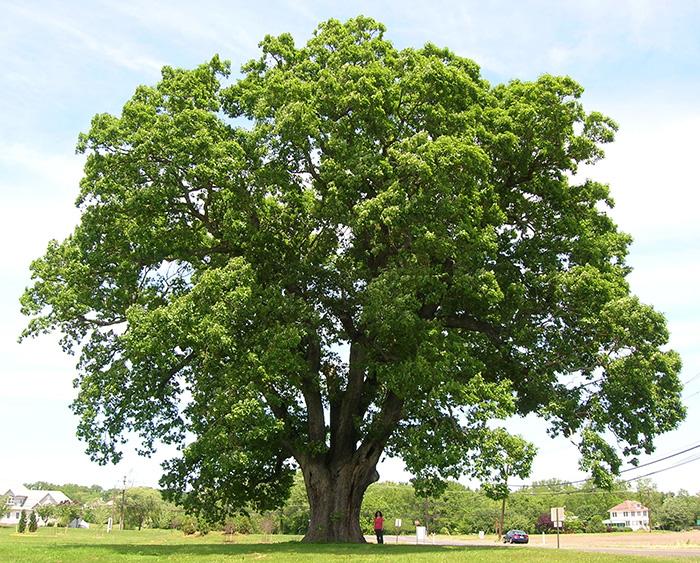
Campus Oak Trees Advance International Research on Climate Change
Published May 23, 2022
How People and Nature are Inextricably Entwined
Published September 26, 2017
Science magazine
One of the world’s most popular trees arose near the Arctic Circle
Published May 26, 2015
Many trees in Southeast U.S. closely related to tree species in Asia
Published May 20, 2015
Study Reveals How Eastern U.S. Forests Came to Be